
The Expensive Watches Athletes Wear

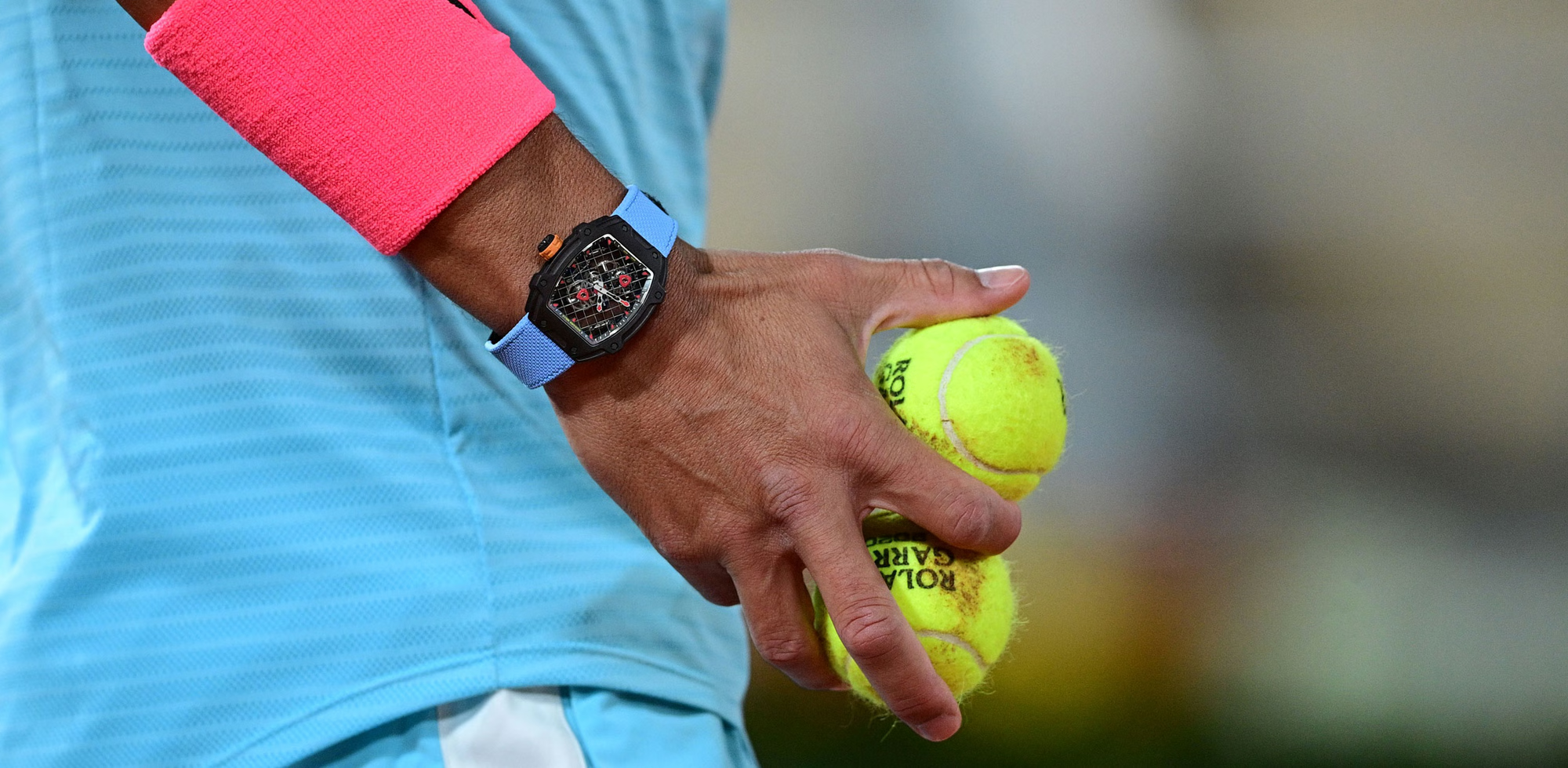
Rafael Nadal wore a $1.05 million watch while winning the French Open on his wrist during the match while serving at 120 mph and generating forces exceeding 12,000 Gs with every stroke.
The watch weighs 30 grams. For context, that’s about the same as six nickels. The watch is made from something called TitaCarb, a polymer so advanced it’s used in aerospace engineering where the movement is suspended by cables thinner than guitar strings. Nadal wore it while hitting a tennis ball harder than most people can throw a baseball.
This is the world of expensive watches athletes wear, where million-dollar timepieces have become performance equipment, flex culture and engineering marvels – not status symbols stored in safes, but occasionally the most impractical fashion statement ever made.

Rafael Nadal Plays Tennis in a $1 Million Watch
Richard Mille approached Nadal in 2008 with a proposition: wear our watch during your matches. Nadal declined, not because of the money (though the prototype cost over $500,000), but because wearing a watch while playing tennis seemed insane. Tennis players don’t wear watches, the forces involved would destroy any normal timepiece, the weight would affect performance. It made no sense.
Richard Mille insisted. The watch was designed specifically to withstand the punishment of professional tennis. It was engineered like a Formula 1 car, with aerospace-grade materials and shock absorption that could handle 5,000 Gs of force. Nadal agreed to try it.
The RM 027 debuted at the 2010 French Open. The watch survived, Nadal won and suddenly, every athlete wanted a Richard Mille on their wrist.
The RM 027 was more than a watch. It was a statement that said: “I’m so successful I can wear a million-dollar machine while working.” The engineering was real (cable-suspended movement, titanium baseplate, grade 5 titanium case), but the flex was the point. Nadal could afford to risk destroying a watch worth more than most people’s houses. That was the message.
Richard Mille built an entire business model around this. Partner with elite athletes. Build watches that can theoretically survive their sport. Charge prices that make Rolex look like a Timex. The RM 027 cost $525,000 at launch. By 2020, the RM 27-04 Nadal model was priced at $1.05 million. Only 50 were made. They sold out before they hit boutiques.

The Expensive Watches Athletes Wear During Actual Games
Nadal isn’t alone. Bubba Watson wears a Richard Mille RM 38-02 while playing golf. It’s designed to withstand 10,000 Gs of force during his swing. The watch weighs less than 10 grams and costs around $450,000. Watson has said he forgets he’s wearing it, which is remarkable considering it costs more than most people earn in a decade.
Yohan Blake, the Jamaican sprinter, wore an RM 59-01 during the 2012 Olympics. The watch was designed to handle the explosive forces of sprinting at world-record pace. It features green and yellow accents matching the Jamaican flag and weighs just 20 grams. Price? Around $600,000.
Charles Leclerc, the Formula 1 driver, tested the RM 67-02 prototype during races. The watch weighs 32 grams (including the strap) and is designed to form a “symbiosis” with the athlete. It sold at auction in 2021 for $2.1 million. The buyer also received two tickets to the Monaco Grand Prix and a VIP meeting with Leclerc. For $2.1 million, you’d hope for more than two tickets, but that’s the market.
These aren’t watches that athletes wear to press conferences. They’re worn during competition. The engineering is legitimate (shock resistance, lightweight materials, durability testing), but the cultural statement is louder than the mechanics. Wearing expensive watches athletes wear during games says: “I’ve transcended normal concerns about money.”

Richard Mille and the Billionaire’s Handshake
FForbes called Richard Mille the “billionaire’s handshake.” When you see someone wearing an RM, you know they’re in the club. The watches are instantly recognizable (tonneau-shaped cases, exposed screws, skeletonized dials) and prohibitively expensive. They start around $80,000 for entry-level models and quickly climb into seven figures.
Richard Mille produces roughly 5,000 watches per year. For comparison, Rolex makes about 1 million while Patek Philippe makes around 60,000. Richard Mille’s scarcity is intentional, as the brand wants to be exclusive, not ubiquitous. If everyone can get one, it’s not a flex.
The brand has partnerships with Rafael Nadal, Bubba Watson, Odell Beckham Jr., Kylian Mbappé, and dozens of other athletes across every major sport. Each partnership results in a custom watch designed for that athlete’s specific sport. The watches are tested in actual competition, then sold in limited runs to collectors who will never subject them to the same forces.
Jay-Z owns multiple Richard Milles, including an RM 56 Sapphire that cost $2.5 million. The case is made entirely from sapphire crystal, which takes over 1,000 hours to machine and you can see straight through it. Drake, Pharrell Williams and Ed Sheeran all own Richard Milles, as the brand has become synonymous with wealth at a level where price isn’t a consideration.
Richard Mille’s genius was creating a product so expensive that owning one signals you’ve made it. The engineering? Incredible. But the real product is status.

Why Athletes Spend Millions on Watches They Could Break
Athletes earning $50 million per year don’t worry about breaking a $1 million watch. That’s the point – the risk is part of the flex. Nadal wearing an RM 027 during the French Open isn’t about telling time, it’s about showing that a million dollars is pocket change.
But there’s another factor: these watches hold their value. Some appreciate. The Richard Mille RM 27-03 Nadal (honoring Spain with tourbillon shaped like a bull’s head) retailed for $698,000. On the secondary market, it sells for $900,000 to $1.2 million. Buying a Richard Mille doubles as flex culture and investment.
Patek Philippe and Audemars Piguet follow similar patterns. Limited production, celebrity endorsements, and price points that ensure exclusivity. A Patek Philippe Nautilus retails for around $30,000, but good luck getting one at that price. The waitlist is years long and on the secondary market, they sell for $80,000 to $150,000 depending on the model.
Athletes buy these watches because they can, because they appreciate in value, and because wearing one signals membership in an extremely exclusive club. The expensive watches athletes wear aren’t about function. They’re about status, investment, and cultural signaling.

The Most Expensive Watches Athletes Wear Off the Court
Not every athlete wears their million-dollar watch during games. Some reserve them for tunnel walks, press conferences, and Instagram posts.
LeBron James owns an Audemars Piguet Royal Oak collection worth well over $500,000. The Royal Oak is one of the most iconic luxury sports watches ever made (designed by Gerald Genta in 1972, octagonal bezel, integrated bracelet, “Tapisserie” dial). LeBron’s been photographed wearing Rose Gold Royal Oaks worth $80,000 to $150,000 depending on the model. He also owns Patek Philippes and Richard Milles, but the AP Royal Oak is his signature.

Odell Beckham Jr. wore a Richard Mille RM 11-03 during an NFL game. The watch cost around $200,000 and features a flyback chronograph. Beckham also owns Patek Philippe Nautilus watches and Audemars Piguet Royal Oak Offshores. His watch collection is estimated at over $1 million.
Cristiano Ronaldo owns a watch collection valued at over $7 million. His most expensive piece is a Franck Muller Grand Complications worth $1.5 million, and he also owns multiple Rolex Daytona models, a Jacob & Co. Astronomia worth $600,000 and several Patek Philippe models. Ronaldo’s watch game has evolved beyond flex culture into a full museum.

Floyd Mayweather (who else?) owns an absurd watch collection including a Patek Philippe Grandmaster Chime worth $2.5 million, a Jacob & Co. Billionaire Watch worth $18 million (yes, eighteen million), and dozens of Rolexes covered in diamonds. Mayweather’s approach to watches is the same as his approach to everything: if it costs money, buy the most expensive version possible and tell everyone about it.
Athletes don’t just wear these watches. They collect them. The expensive watches athletes wear off the court are investments, status symbols, and conversation starters. When you’re worth $100 million, a $500,000 watch is barely noticeable in the budget.

LeBron James and the Audemars Piguet Flex
LeBron’s tunnel walk routine is legendary. He arrives at the arena three hours before tip-off, dressed in custom fits that cost more than most people’s monthly rent, and his wrist is always the focal point. The Audemars Piguet Royal Oak he wears most often is 18-karat rose gold with a chocolate brown dial. Retail price: $80,000. Secondary market: $120,000 to $150,000 depending on condition.
But LeBron’s watch game goes beyond AP. He’s been spotted wearing a Patek Philippe Nautilus 5980 (steel with rose gold bezel, $120,000), Richard Mille watches during off-season training, and multiple Rolex Daytona models. His collection is estimated at over $500,000, but that’s conservative. The secondary market value is likely closer to $1 million.
LeBron’s watch choices aren’t random, as Audemars Piguet and Patek Philippe are part of the “Holy Trinity” of watchmaking (along with Vacheron Constantin). Owning these brands signals you understand horology, not just wealth – it’s a refined flex. Anyone can buy a diamond-encrusted Rolex, but owning a Royal Oak Jumbo Extra-Thin or a Patek Philippe Nautilus shows you know watches.
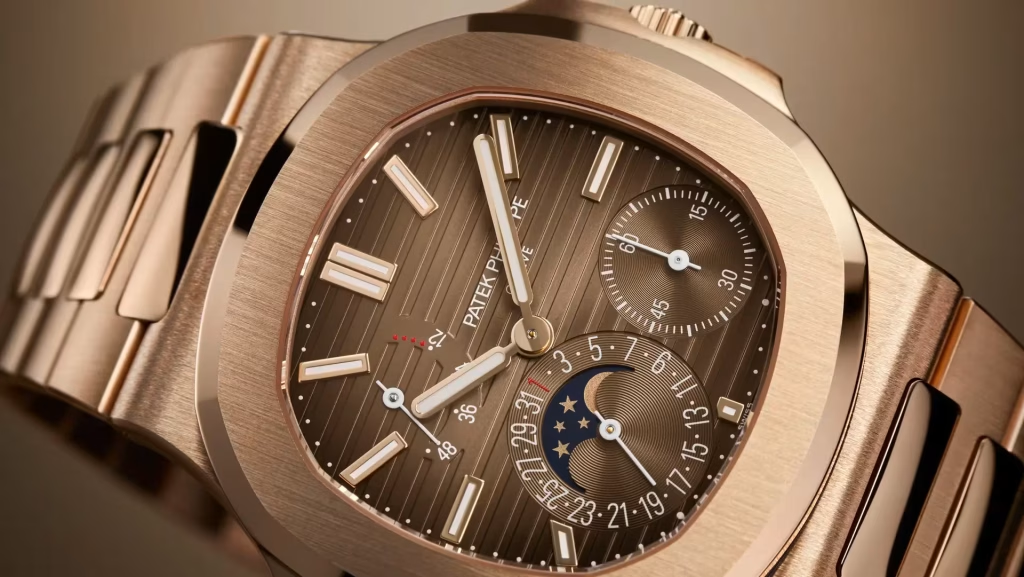
The tunnel walk watch flex has become its own cultural moment. Just like tunnel walk fashion became a runway, the watches athletes wear became status statements as players coordinate their fits around their watches. The watch isn’t an accessory – it’s the centerpiece.
When Expensive Watches Athletes Wear Get Stolen
Wearing a $1 million watch in public comes with risks. In 2022, multiple professional athletes had their watches stolen at gunpoint. The thieves knew what they were looking for. A Patek Philippe Nautilus or Richard Mille is instantly recognizable and worth six figures. Reselling them is easier than you’d think (there’s a massive black market for luxury watches).
Soccer players are frequent targets. Watches have been stolen from players leaving training facilities, restaurants, and their own homes. In some cases, the thefts were coordinated by organized crime groups tracking athletes’ social media to see what they’re wearing.
Athletes now hire security specifically to protect their watch collections, some insure their watches for more than their cars while others stopped wearing expensive pieces in public altogether, reserving them for private events or keeping them locked in safes.
The irony: the whole point of wearing expensive watches athletes wear is to be seen, but being seen makes you a target. Some athletes switched to wearing replicas in public, keeping the real pieces at home, while others doubled down, hiring armed security to escort them while wearing $500,000 on their wrist.
This hasn’t slowed the market. If anything, the danger adds to the mystique. Owning a watch so valuable you need security to wear it? That’s a different level of flex.

The Watch as the New Championship Ring
Championship rings are cool – they’re free (teams pay for them), they’re unique and they commemorate an actual achievement. But they’re not a flex, as everyone knows you earned it through winning, not buying.
The expensive watches athletes wear are different. They’re self-purchased status symbols. Wearing a Richard Mille or Audemars Piguet says: “I earned enough money to buy this.” It’s a flex that transcends team achievement. It’s individual wealth on display.
Some athletes care more about their watch collection than their championship rings. Floyd Mayweather famously said he owns watches worth more than some athletes’ entire net worth. He wasn’t wrong. His Jacob & Co. Billionaire Watch alone ($18 million) is worth more than most NBA players earn in their entire careers.

The watch has become the ultimate flex in professional sports. Rings commemorate the past. Watches flex the present. And for athletes at the peak of their earning power, the message is clear: the game made me rich, and I want you to see exactly how rich.
Nadal wore his Richard Mille during matches. LeBron still wears his Audemars Piguet in the tunnel. And somewhere, Floyd Mayweather is buying another watch worth more than your house. The expensive watches athletes wear aren’t going anywhere. If anything, they’re getting more expensive.


